
Machine uptime and availability are vital components of efficient industrial and manufacturing processes. Equipment that remains operational for extended periods without failure enhances productivity, reduces operational costs, and supports a consistent workflow. By implementing effective strategies, companies can ensure their machines run optimally, reducing costly downtime.
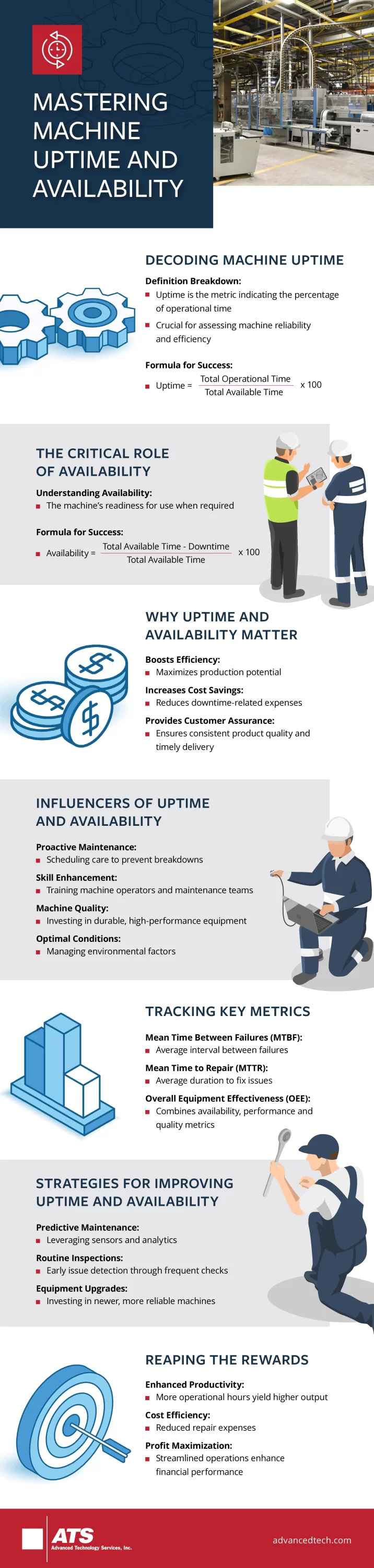
Machine uptime is a crucial performance indicator measuring the percentage of time equipment is functional and in use. Maximizing uptime requires a combination of proactive maintenance, skilled technicians, and high-quality machinery. Consistent uptime prevents disruptions in the production line, enabling manufacturers to meet deadlines and maintain output efficiency.
Availability encompasses both uptime and the readiness of machinery when needed. Even if a machine is not actively running, it must be accessible for production when required. Availability is a broader metric that factors in maintenance schedules, equipment readiness, and operational efficiency. Ensuring machines are available when needed eliminates production bottlenecks and increases overall output.
The consequences of machine downtime can be severe, leading to lost revenue, delayed shipments, and increased operational expenses. To prevent these issues, manufacturers should implement robust maintenance strategies. Preventive maintenance involves routine inspections and servicing, reducing the likelihood of unexpected failures. Predictive maintenance services further enhance reliability by using real-time data to anticipate problems before they lead to breakdowns.
The skill level of maintenance personnel and machine operators plays a crucial role in sustaining high uptime. Employees with the right expertise can quickly detect abnormalities, perform necessary adjustments, and prevent small issues from escalating into major problems. Training programs focused on machine operation and troubleshooting help reduce human errors and improve response times during machine malfunctions.
Investing in high-quality machinery with advanced monitoring capabilities further supports uptime and availability. Modern equipment often features built-in diagnostics, remote monitoring, and automated alerts, making it easier to detect and address performance issues promptly. Additionally, environmental control measures such as regulating temperature, managing humidity, and maintaining clean workspaces can contribute to machine longevity and reliability.
Tracking key metrics like Mean Time Between Failures (MTBF) and Mean Time to Repair (MTTR) allows businesses to assess machine performance and refine maintenance strategies. A lower MTTR indicates faster repair processes, minimizing downtime and increasing overall equipment availability.
By adopting a data-driven, proactive maintenance approach, manufacturers can improve uptime and availability, leading to increased production efficiency, reduced costs, and greater overall competitiveness in the industry.